Experiencing the Phenology of New Jersey – Worthy of a Celebration!

Leave a comment

To find new things, take the path you took yesterday.
 - John Burroughs

I talk a lot about nature.  As a naturalist, my job is often to introduce participants to the seasonal discoveries they may not be wired to notice or have the time to slow down and recognize. Walking through habitats everyday and recording my observations helps to take notice of what is happening in the natural world. Phenology is the study of the timing of these natural events.  The word comes from a Greek word that means “coming into view”.  Events like the first openings of leaf and flower buds and the first calls of frogs and toads are all considered phonological events.  The timing of these events varies in different locations due to the climate differences.

Different factors affect an areas climate, including temperature, amount of precipitation, and day length at different latitude and altitude.

The occurrence of observed phenomenon may alter slightly from year to year, but is predictable.

If you hike, paddle, hunt, go birding or enjoy nature photography being in touch with the changing seasons brings eager anticipation for the delightful celebrations nature puts forward.  Try keeping your own phenology journal to be ready for each special moment in your neck of the woods.

Tips:  Check the dates of your digital photographs to record past observations!   Add these notes to your calendar so you can plan when and where you want to be far in advance.

Here is a general list of some of my New Jersey nature observations.

Let me know in the comments what  seasonal discoveries you look forward to  seeing.

January

  • Black Bear cubs (usually two) are born in late January through February weighing around one pound.
  • Great horned owls incubate eggs late January through February.
  • Red-tailed and red-shouldered hawks begin to court and lay eggs.
  • Animal tracks are easy to discover after a light snowfall.
  • Eastern Tiger Salamanders begin breeding in vernal pools in southern New Jersey.
  • Long-tailed salamanders mate in underground tunnels near freshwater springs.  The female will secure her clutch of approximately 90 eggs to stones or wood within the water.

February

  • Screech Owl Courtship is taking place, nestlings take 28 days and they fledge at dusk.
  • Great Horned Owl nestlings are feeding and on branches.
  • Red maple trees flower.
  • White-tailed deer bucks are dropping their antlers.
  • Late-Feb: Bald Eagles begin laying eggs.  Clutches consist of one or three eggs. Incubation lasts approximately 36 days.

  March

  • Early – Amphibian Migration to Vernal Pools, look and listen for for calling frogs like spring peepers and wood frogs as well as eggs in pools.
  • Woodcock Watch (prenuptial flight) is taking place.
  • Skunk cabbage is emerging in wetlands.
  • Bald Eagle chicks begin to hatch.  Hatching will continue throughout March and April depending on when the eggs were laid.
  • Barred owls begin their mating rituals and can be heard calling throughout their wetland territory.  Have you heard the “who cooks for you, who cooks for you allll” song of the barred owl?
  • Note: March 20-21: Equal Day and Night.

April

  • Look for Morel Mushrooms after a spring rain under mature tulip trees.
  • Wood ducks incubate their eggs.
  • Jack-in the Pulpit begins to grow.
  • Ostrich Fern Fiddleheads are ready for foraging.
  • Wild Leeks are almost at their peak for harvest.

 May

  • Migratory song birds peak in early May.
  • Animal Babies: woodchucks and ducks mid-late May.
  • Rose Breasted Grosbeak and Oriole will eat half orange at this time.
  • Cinnamon ferns are open and covered in a cinnamon colored cotton like material used by hummingbirds for their nests.
  • White-tailed deer fawns are born (usually twins) late-May-early-June.
  • Gray Tree Frogs calling in swamplands.

 June

  • Hummingbirds are visiting feeders and red/orange tube flowers.
  • Green frogs are calling  (listen for clucks like a banjo string being plucked) and laying eggs.
  • Sedum is blooming on roof gardens.
  • Snapping turtles are laying eggs as far as a mile from their water source and wood ducks laying second clutch.
  • Note: June 21-22 is longest daylight period.

 July

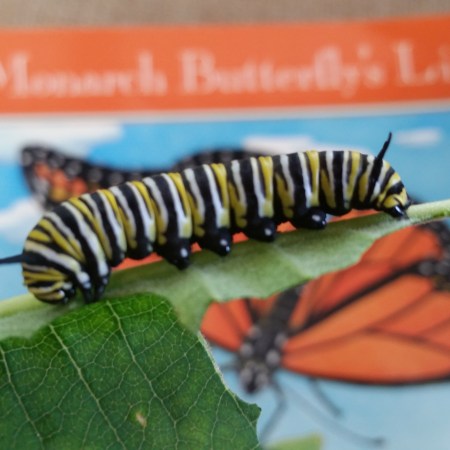
  • Milkweed is attracting Monarch butterflies (look for eggs or caterpillars often on the bottom on the leaves).
  • Mid-July Nesting Orioles.
  • Daylilies in bloom.
  • Goldfinches are latest nesting bird.
  • Kingfishers, Herons and egrets active in wetland ditches because swamp is dry.
  • White-tailed deer bucks antlers are in velvet.

 August

  • Marsh Mallow is blooming in swamplands.
  • Early August – Goldenrod blooms.
  • Late August – Peak of Humming Bird Fall Migration.

 September

  • Passerine Migration begins.
  • The last generation of Monarchs are on their way down south.
  • Note: September 21, 22 offers equal day and night.

October

  • Hawk Migration (Visit a Hawk Watch!).
  • Deer Rut begins in NJ.
  • Wild fruit such as pawpaw, devils walking stick, wild grapes and black gum are abundant.
  • Many fruits and vegetables are ripe in NJ farms and gardens.

 November

  • Early- November – First Frost (get bulbs underground beforehand).
  • Large flocks of robins and blackbirds roost in swamp.

December

  • Animal Tracking: shoot tracks in shade (your own shadow) and open up a stop or two.
  • Great Horned Owls are setting up their nesting territories, sometimes in an old crow or hawk nest and will be on eggs in February.
  • Note: December 21,22 earth is tilted away from sun so shortest period of daylight.


Finding what you’re looking for! (Focus on New Jersey)

There are many wonderful environmental centers and park conservancies that will help you get closer to nature.  Join your local center for a seasonal walk or consider going out with an organization that focuses more closely on a specific topic of interest.

Butterflies: Take an outing with the local chapter of the North American Butterfly Association http://www.naba.org/chapters/nabanj/

Dragonflies and Damselflies: Take an outing with the Jersey Odonate Enthusiasts http://www.njodes.com/

Honeybees: Visit a local chapter of the NJ Beekeeper Association http://njbeekeepers.org/

Mushrooms:  Take an outing with the New Jersey Mycological Association http://www.njmyco.org/

Amphibians: Middle of March is the beginning of the amphibian breeding season.  Join an amphibian crossing with the New Jersey Endangered and Nongame Species Programhttp://www.njaudubon.org/Education/AmphibianIntro.html

Birds: Join an outing led by expert naturalists with New Jersey Audubon http://www.njaudubon.org/

Plants: Join programs offered by the New Jersey Native Plant Society http://www.npsnj.org/

Additional Ideas for Nature Discovery!

  • Create a Photo Journal, sketch pad or nature notebook full of your seasonal discoveries
  • Five Minute Phenology – explore, discover, observe, record once every day for five minutes.
  • Document what is occurring outside  your home or schoolyard.  Let your own kids or students add their own observations.
  • Most Importantly, Share your Discoveries!

Brook Trout and Wild Leeks/Ramps

2 Comments

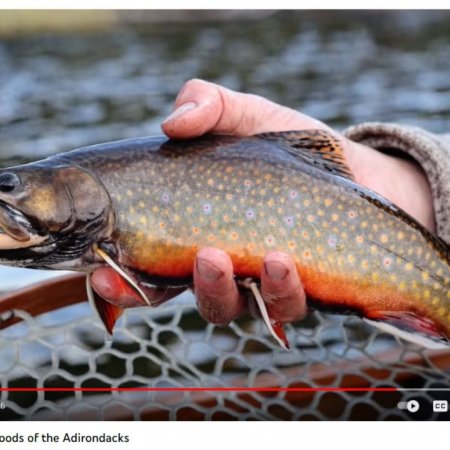
For many fisherman, spring tradition includes getting out for opening day of trout season and staying out until you’ve caught your creel limit or until it gets dark..one or the other.

Thanks to NJ Fish and Wildlife, with funding from our fishing license fees, the rivers and lakes were seriously stocked to give the experienced and novice angler much success.


While out and about walking towards your favorite fishing hole trying to catch your main ingredient, look around carefully, as you may be stepping on a side dish or plant important for flavor.   Wild Leeks, an edible spring ephemeral, take advantage of the sunlight shooting through the bare branches of mature forest and begin growing in earnest.  Look for their thick green leaves growing in mats on the woodland floor, scratch and sniff to recognize their unmistakable smell. Remember to properly identify all wild edibles and harvest selectively to maintain abundance for future visits and all others depending on the plant.


Once you have your fish and wild leeks cleaned, head back to camp to prepare them for cooking over the campfire.

You can simply place wild leeks leaves and bulbs inside the trout before placing on the pan to fry.

You may also want to add field garlic/onion grass for flavor and accompany with a cup of spicebush tea.

After the paleolithic meal, don’t forget to sit around and enjoy the caveman tv/campfire.

Don’t be a Rookie, catch a Brookie!  Enjoy Spring.

The Nest Seekers by Chris Bickel

2 Comments

Congrats to my friend Chris who recently released a book titled “The Nest Seekers” about a group of citizen scientists that go out to collect data on bird nests. See my review below and click the book to check it out!

Chris’s book “The Nest Seekers” takes students beyond their familiar backyard knowledge of Robin’s nests and further into the exciting and diverse world of birds, birding and bird nests.  The writing cleverly captures both the joy and challenges of citizen science for young readers.  After reading, children will undoubtedly be looking high and low, acting as wildlife detectives the next chance they get to have an outdoor adventure.” -David Alexander

The Nest Seekers by Chris Bickel

Vernal Pools in Northern NJ

Leave a comment

Went out to explore a vernal pool complex and found Jefferson, Slimy and Spotted Salamanders as well as Bullfrog tadpoles, Green frog tadpoles and adults, a few eastern newts and some Predaceous Diving Beetles.  Calling were spring peepers and a lone leopard frog.  My favorite picture of the bunch is the eastern newt stuck in the green slime.

If your interested in learning more about vernal pools, specifically the dates at which things are happening an excellent list serve to join is vernal pool on yahoo groups.

Finding Dusky Salamanders in a Creek

Two antennae up! Jessica R. Kratz’s Review of Buzz Into Action

Leave a comment

Building from the successful format and platform used in “Hop Into Action: The Curriculum Guide for Grades K-4 – PB287X,” David Alexander was able to take his subject matter a few steps further in “Buzz into Action.” Granted, the subject matter of insects and related invertebrates lends itself to greater diversity of explorations and extensions, but David also goes further in other areas. David’s passion and personality shine through even greater in this guide, and it is especially evident when he draws directly from his experience at Essex County Environmental Center in providing a readily applicable blueprint for starting a Bug Club. Clever quips and cultural references such as “Savage Garden” and “The Sweet Life” are well-placed and greatly appreciated. Although written for elementary school learners, he does not shy away from relevant vocabulary or content, and as such, activities such as “Insects in Winter Scavenger Hunt” can easily be used in higher grades and are a great option for homeschoolers, scouts, nature centers, and families with mixed-age learners. An extensive glossary will help define any term that comes up in your entomological exploration. The activities in “Buzz into Action” pair well with a variety of service learning activities or curricular units you may already be doing, such as composting, gardening, Certified Wildlife Habitat, or GreenSchool! David also provides an amazing resource list that will provide a starting point for any citizen science project, special event, or curricular journey you wish to embark on. David’s activities are readily, if not instantly, applicable. A week after receiving my copy, I was already using the Seasonal Discoveries journal page with ruler markings for kids to measure and record observations about natural objects during a “Get Out and Play” day event at my nature center. I also plan on incorporating other lessons into early childhood education programming and am looking at pages such as “Mommy and Me Metamorphosis” in considering how to re-design an exhibit. I look forward to making some of David’s Famous Seed Balls soon as well. If you do not yet own a copy of “Buzz into Action,” I suggest you swim, crawl, or fly to your nearest internet connection to place your order today.

Buzz Into Action

Press Release: Discover Camouflaged Critters and More With NSTA`s Buzz Into Action: The Insect Curriculum Guide for Grades K-4

Leave a comment

PRESS RELEASE:

Discover Camouflaged Critters and More With NSTA`s Buzz Into Action: The Insect Curriculum Guide for Grades K-4

Wed Mar 7, 2012 8:30am EST

NSTA’s new Buzz Into Action: The Insect Curriculum Guide for Grades K–4 is a lively, cross-disciplinary resource to help teach students about the world’s most abundant and accessible group of animals. The book’s 20 hands-on lessons work individually or as a curriculum, in the field or in the classroom. The investigations involve scientific inquiry and knowledge building that treats science as a process, not forced memorization.

Activities range from the basic—how to identify an insect—to the irresistible—“Pollination Party Relay Race,” “Camouflaged Critters,” and “Colony Collapse Town Meeting.” For ease of use, each lesson plan provides

  • A quick-read overview of the activity’s requirements
  • Detailed objectives, materials lists, and background information
  • Step-by-step procedures and reproducible activity sheets
  • Assessments and extensions
  • Reference materials including field guides, websites, and story books that complement lessons and help teachers home in on species from their own region

Whether it’s used by a classroom teacher, camp leader, or homeschooler, Buzz Into Action will have young scientists buzzing—and humming, chirping, and clamoring for more.

About the Author

David Alexander is an experienced naturalist who uses the environment to educate diverse groups of students of all ages. He wrote the award-winning NSTA Press book Hop Into Action: The Amphibian Curriculum Guide for Grades K–4. He also facilitates a Bug Club with themed monthly meetings.

You can browse sample pages of this new book free at the NSTA Science Store website at http://www.nsta.org/store/

For additional information or to purchase Buzz into Action and other books from NSTA Press, visit the NSTA Science Store at www.nsta.org/store. To order by phone, call 800-277-5300 between 9 a.m. and 5 p.m. ET weekdays. Outside the United States and Canada, call 301-638-0200. The 168-page book is priced at $23.95 and discount-priced for NSTA members at $19.16. (Stock #PB319X, ISBN #978-1-936959-12-9)

The Arlington, Va.-based National Science Teachers Association is the largest professional organization in the world promoting excellence and innovation in science teaching and learning for all. NSTA’s current membership includes more than 50,000 science teachers, science supervisors, administrators, scientists, business and industry representatives, and others involved in science education.

NSTA Pressproduces 20–25 new books each year. Focused on the preK–college market and specifically aimed at teachers of science, NSTA Press titles offer a unique blend of accurate scientific content and sound teaching strategies.

National Science Teachers Association (NSTA)
Jennifer Gulley, 703-312-9285
jgulley@nsta.org

Buzz Into Action

Nature’s Recyclers

2 Comments

Recently, I’ve been visiting a lot of schools focusing on recycling education. We do many different activities depending on the time allowed and age taught.  We discuss what can be recycled and why, read a story about “the day the trash came out to play”, play litter bits by working together to clean up a mess and putting things in the proper container followed by hitting “the easy button”.
We also play a Velcro “How Long Your Garbage Will Last” litter time line game, make recycled paper with blenders and screens, decide on the scenario best for the environment comparing paper and plastic bags (choose canvas), silverware vs. plasticware (choose the spork), paper towels vs. cloth towel (choose to shake dry), reusable coffee/water bottles versus disposable and so on.  We also look closely at green building materials (recycled plumber/etrex boards, recycled glass tiles, recycled tire shingles, recycled clothing carpeting and so on.)
The most exciting moment is always focusing on nature’s recyclers and how we can compost food waste to make soil diverting even more waste from the landfill. Bringing out red wigglers and millipedes always makes for a memorable visit for any age classroom.

Visiting Hillside Elementary School, Livingston. West Essex Tribune.


Over in the Forest – Children’s Book Review

Leave a comment

I recently had the opportunity to be an educational consultant with Dawn Publications reviewing and providing feedback on Marianne Berkes’s new children’s book “Over in the Forest, Come and Take a Peek”.  The book is now available for purchase with my endorsement.

Marianne’s book allows children to move from passive to active learning as they count and sing and share in the excitement of each new forest animal discovery. Young readers will be delighted with every turn of the page. 
- David Alexander, author, Hop Into Action, The Amphibian Curriculum for Grades K-4 & Buzz Into Action, The Insect Curriculum for Grades K-4.

Over in the Forest by Marianne Berkes

Dawn Publications is a top notch children’s book publisher focusing on nature education.  Some of my favorites include Eliza and the Dragonfly, Pass the Energy Please and Salamander Rain.  http://www.dawnpub.com/


Howling Woods Farm – Wolf Hybrids

Leave a comment

Took a trip to visit the wolves at Howling Woods Farm in Jackson, NJ.  http://www.howlingwoods.org/

Howling Woods Farm is a breed-specific animal shelter that rescues and places domestic bred wolves, wolfdog hybrids and northern breeds.   Visitors can schedule a chance to interact with the wolves on weekends and learn from their staff/volunteer educators.

Lucky for Natalia and I, Mike, the owner brought out a frozen deer carcass to feed the hungry pack.  We had the chance to see their pack behavior as the lead dog took control and enjoyed his share before allowing the others to feed.

“If you are not the lead dog the view never changes”.

Shed Hunting

Leave a comment

White Tailed Deer bucks around New Jersey begin to drop their antlers as early as December or as late as March.  The lack of snow this winter has made shed hunting easier then in years past.  I found a shed on December 31st and recently another on January 29th.  The recent find happened to be a shed from last year that managed to go unnoticed by wildlife looking for a nutritious snack.  I wonder if it was the proximity to the road that left the antler untouched by wildlife?  The antlers are an excellent treat for animals the size of rodents up to coyotes craving calcium.

Older Entries

Follow

Get every new post delivered to your Inbox.